Rethinking partnership
Partnerships

Partnerships
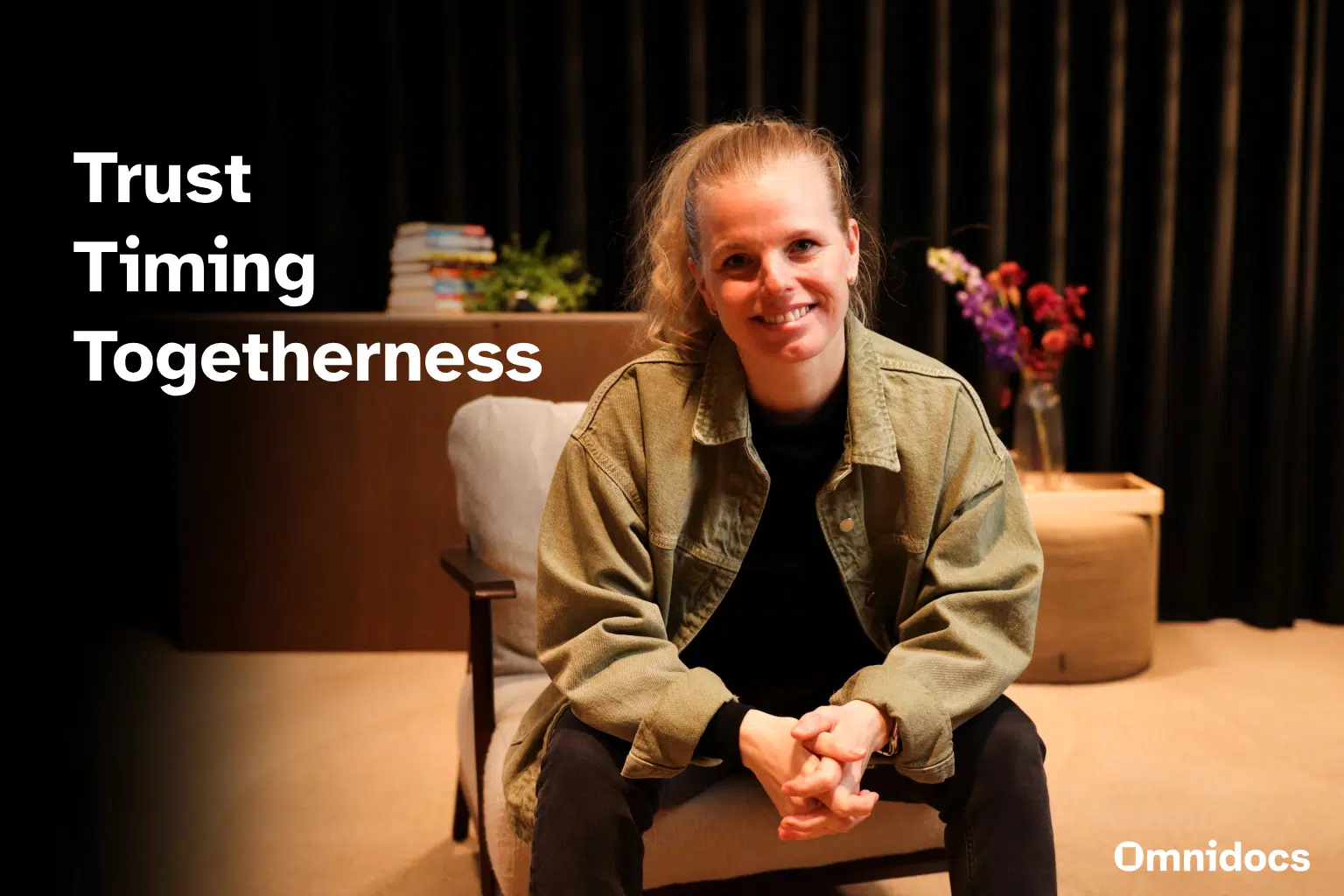
Trust, timing, and togetherness
How do we create great partnerships in the document industry, and is “partnership” an overused word in business?
If it is overused or not is a matter of perspective, but when it comes to creating great partnerships, we have some insight.
What is a good business partnership?
We describe vendor relationships as partnerships. We refer to integrations as partnerships. We call joint marketing efforts partnerships. The term signals closeness and strategic intent, yet in practice many of these relationships remain transactional.
There is nothing wrong with transactional relationships. They are often efficient and clearly defined. The challenge arises when we expect partnership behavior from a structure that was never designed to support it.
A true partnership is not defined by a contract. It is defined by shared direction.
The commercial agreement may outline:
But the strength of the partnership is determined elsewhere. It is shaped in how decisions are made, how risks are shared, and how openly challenges are addressed.
“In my experience, the difference becomes most visible when something does not go according to plan. In a transactional setup, the focus quickly turns to obligations. Who is responsible. What was agreed. What sits inside or outside scope. In a real partnership, the first question is different. How do we solve this together.”
– Kamilla Glenstrup, Partner Engagement Lead, Omnidocs
That shift in perspective changes the entire dynamic.
Why is trust important in partnerships?
Partnership requires trust, but not in an abstract sense.
Trust shows through behavior, strategic conversations, shared concerns and reservations, and in speedy decisions based on that trust. This all results in a process that is upheld without excessive alignment loops.
Trust reduces friction, and reduced friction increases momentum.
Is timing important in partnerships?
Yes, timing is equally important. Even well-aligned organizations can struggle if they move at different speeds or operate under different strategic pressures. One company may be scaling aggressively, while the other is consolidating. One may be investing heavily in innovation, while the other is focused on operational stability.
Without mutual awareness of these dynamics, misalignment can quietly grow. Not because either party is unwilling, but because they are navigating different realities.
Why is togetherness important in this process?
Togetherness is perhaps the most underestimated element, and yet it is often where the principles of trust and timing break down. It is visible in whether teams interact beyond formal touchpoints, if knowledge flows in both directions, and if success stories are celebrated jointly or claimed individually.
Togetherness creates resilience. When both sides experience themselves as part of the same journey, challenges are less likely to become dividing lines.
It is also worth recognizing that partnerships evolve. The conditions under which they were established rarely remain static. Markets shift. Strategies change. Leadership transitions. If the relationship does not adapt, it gradually loses relevance.
This is why partnerships require active leadership. Not in the sense of control, but in the sense of stewardship. Someone has to ensure that direction remains shared, that expectations are recalibrated, and that value creation is mutual.
The most successful partnerships I have seen are not necessarily the most complex or the most innovative. They are the ones where both parties are intentional, clear about the nature of the relationship, honest about their ambitions, and willing to invest beyond immediate return.
Partnership is not a label. It is a practice.
And like any practice, it only delivers value when it is approached with clarity, commitment, and mutual respect.
What it means to be in a partnership with Omnidocs
At Omnidocs, partnership means combining strengths to create better document experiences for clients.
Our partners typically come from two directions. Design agencies bring creative vision and brand expertise, and technology partners integrate document workflows into the platforms their clients already use.
The goal is the same in both cases: to turn complex document processes into scalable, reliable solutions that actually work in everyday operations.
That means working closely together, sharing knowledge, aligning on client needs, and ensuring that great design, strong systems, and practical usability come together in the final solution.
For our partners, it is an opportunity to expand their offering and deliver more value to their clients. For us, it is a way to combine expertise and build smarter document solutions together.
Find more about partnership here.
Meet Kamilla, your go-to contact
Every great collaboration starts with the right conversation.
Kamilla is our dedicated design agency lead, helping partners like you bridge the gap between creativity and seamless implementation. With deep expertise in brand execution and Microsoft platform integration, she ensures your designs don’t just look stunning – they work effortlessly for your clients.
Kamilla Glenstrup
kgl@oddev.demo.supertusch.com
+45 31323807