5 reasons to work with document generation
Document generation

Document generation

Document generation
Document creation is a critical part of daily operations in most organizations. But traditional methods – copy-pasting content, manually formatting documents, and searching for the right version – are slow, error-prone, and frustrating.
With document generation, organizations can streamline workflows, improve accuracy, and free up valuable time for more strategic tasks. Here’s why document generation is worth considering:
Manually creating documents from scratch takes time – especially when dealing with repetitive tasks like contracts, reports, and proposals. Document generation automates this process by using templates and pre-filled data, reducing time spent on admin work and allowing employees to focus on more valuable activities.
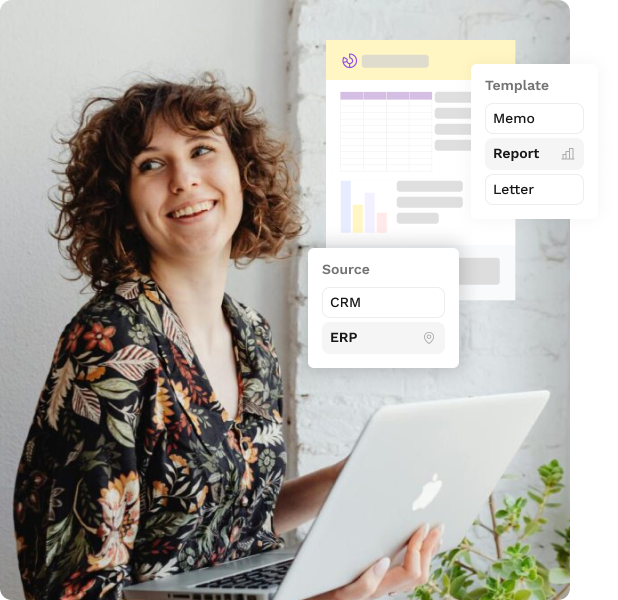
Copy-pasting content across documents increases the risk of mistakes, from incorrect client details to outdated branding. With document generation, data is pulled directly from integrated systems like CRM or ERP, ensuring accuracy and consistency across all documents.
For industries with strict regulations, keeping documents compliant can be a challenge. Document generation ensures that every document follows the correct legal and brand guidelines, reducing risks and making audits easier with built-in version control and approval workflows.
Multiple people often contribute to a single document, leading to version confusion and inefficient back-and-forths. Document generation solutions integrate with collaboration tools, making it easier to manage approvals, track edits, and ensure all stakeholders are aligned.
As businesses expand, so does the volume of documents. Whether onboarding new employees, managing contracts, or generating reports, document generation scales with your needs, ensuring that processes remain efficient even as demand increases.
Document generation isn’t just about efficiency—it’s about empowering teams to work smarter, reduce frustration, and focus on high-value tasks. By automating repetitive work, organizations can minimize errors, improve compliance, and ultimately deliver a better experience for employees and customers alike.
Learn more about Create